How a Fintech SaaS Reduced Managed Database Costs by 50-60% with SelfHost

A fast-growing fintech SaaS company operating 30+ production databases across AWS, GCP, and Azure faced rising managed database costs and fragmented multi-cloud operations. By adopting SelfHost as a cost-efficient managed database platform, the company could reduce managed database costs by 50-60% while improving visibility and simplifying cross-cloud governance, without sacrificing reliability.

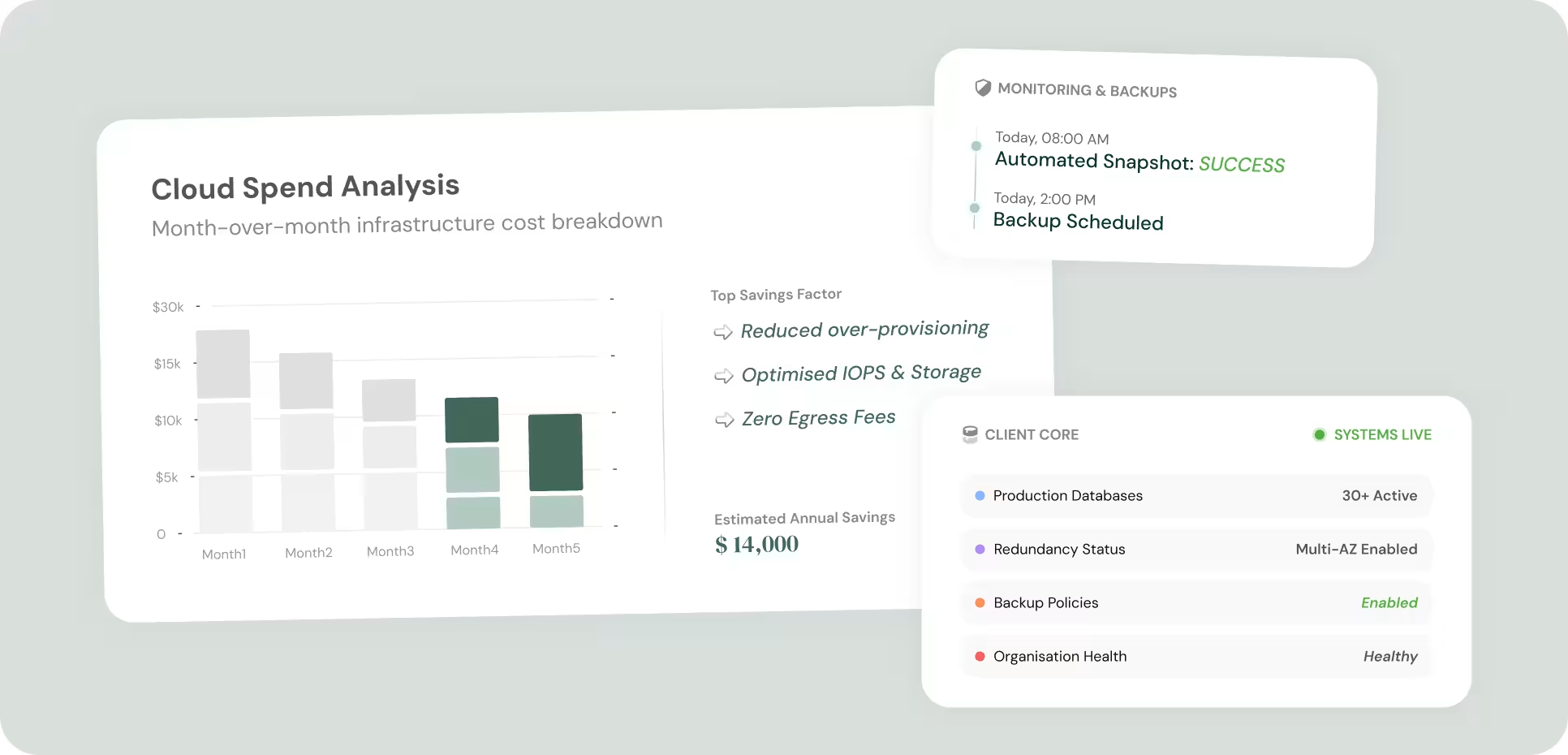
Cloud spend analysis dashboard showing how a fintech SaaS can lead to reduced managed database costs across multi-cloud infrastructure

Background

This fast-growing fintech SaaS company supports mission-critical applications for financial services and e-commerce clients. With rapid customer growth and expanding transaction volumes, their infrastructure scaled to include:

While managed database services ensured uptime and operational stability, long-term costs began increasing significantly. As usage scaled, the finance and engineering teams identified the need to reduce managed database costs while maintaining high availability and performance.

The Challenge: How to Reduce Managed Database Costs Across Multi-Cloud Environments

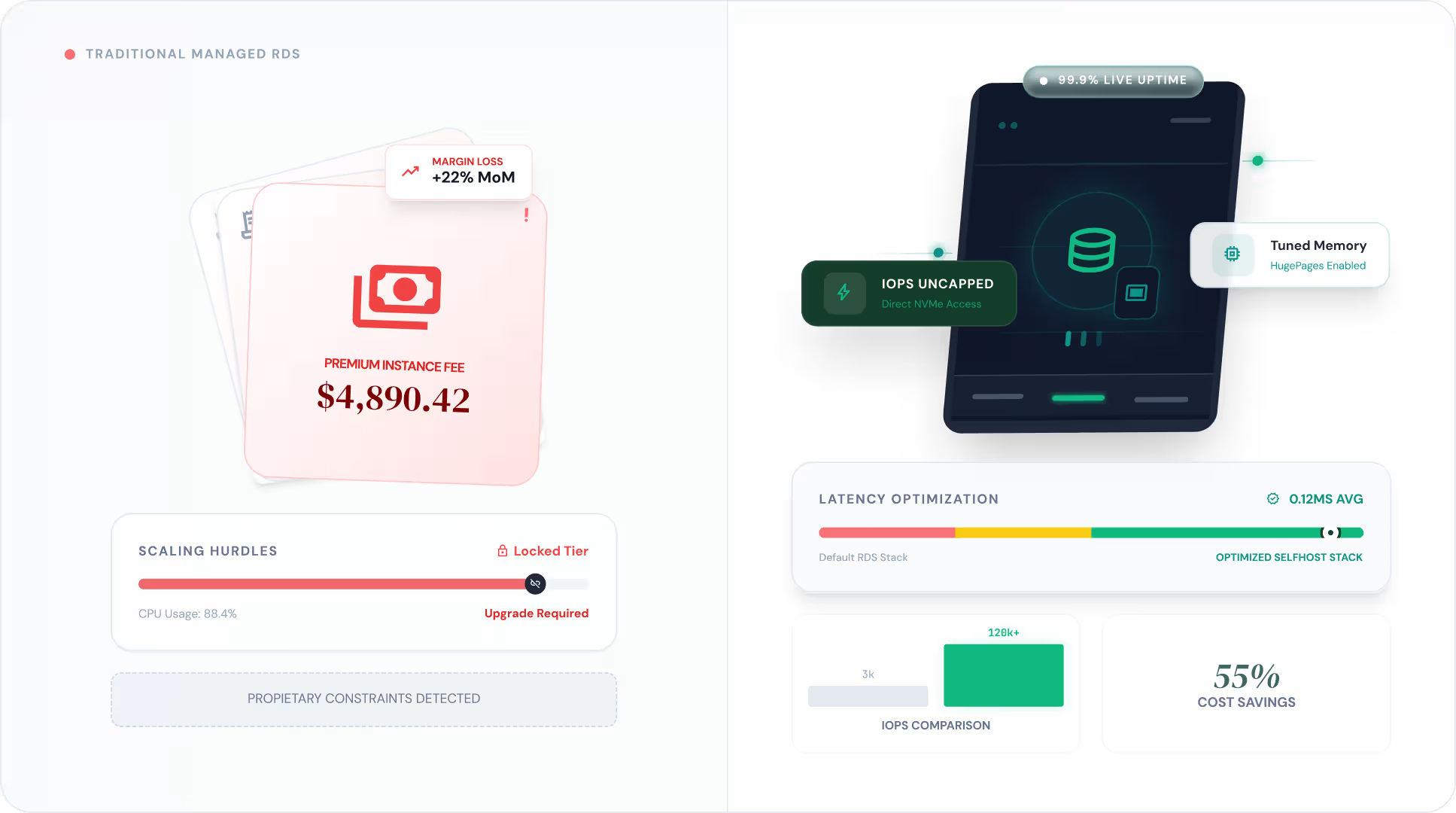
As the company expanded, managed database costs became one of the largest contributors to their cloud bill. Cost drivers in managed services include:

At the same time, operating across AWS, GCP, and Azure introduced additional complexity.These Multi-Cloud Operational Complexities include:

Engineering teams needed greater flexibility in performance tuning and infrastructure control, while finance teams required better cloud database cost optimisation and spending visibility. The company began evaluating options to reduce AWS RDS costs and optimize Cloud SQL spending without sacrificing reliability.

The Opportunity: A Managed Database Alternative with SelfHost

If this organisation were to implement SelfHost as its database management platform, it could adopt a more efficient and cloud-agnostic approach to infrastructure management.

1. Reduce Managed Service Premiums

By running PostgreSQL and MySQL workloads on optimized compute instances instead of fully managed services, they could:

This creates a practical managed database alternative that maintains enterprise-grade reliability while significantly lowering recurring costs.

2. Unified Multi-Cloud Database Dashboard

SelfHost enables centralized multi-cloud database management through a unified database dashboard that spans AWS, GCP, and Azure. Instead of navigating separate cloud consoles, teams gain:

This single-pane-of-glass control plane reduces operational overhead and simplifies infrastructure oversight across regions and providers.

3. Improved High Availability & Backup Strategy

With SelfHost, the company could design:

This approach ensures enterprise-grade reliability while maintaining cost efficiency and infrastructure control. By adopting a cost-efficient managed database platform, the company reduces dependency on premium managed services without increasing operational burden.

Potential Business Impact

Based on similar infrastructure environments, the company could expect:

Strategic Outcomes

By adopting this model with SelfHost, the fintech SaaS company could:

Conclusion

For growing SaaS organisations operating dozens of databases across AWS, GCP, and Azure, managed services provide convenience but often at a significant recurring cost.

By leveraging SelfHost for multi-cloud database management and cloud database cost optimisation, companies can reduce managed database costs while maintaining high availability, scalability, and performance. As infrastructure complexity increases, adopting a managed database alternative that preserves control and reduces vendor dependency becomes a strategic advantage.

What our users say

"SelfHost delivered our entire platform ahead of schedule, flawless execution and real partnership."

"NextSaaS transformed our reporting process, reducing what used to take hours into just a few clicks. It has become our definitive source of truth, streamlining our operations and enhancing our decision-making capabilities."

Darren Mitchell

CFO at VelocityFinance

More studies that can drive scalable growth

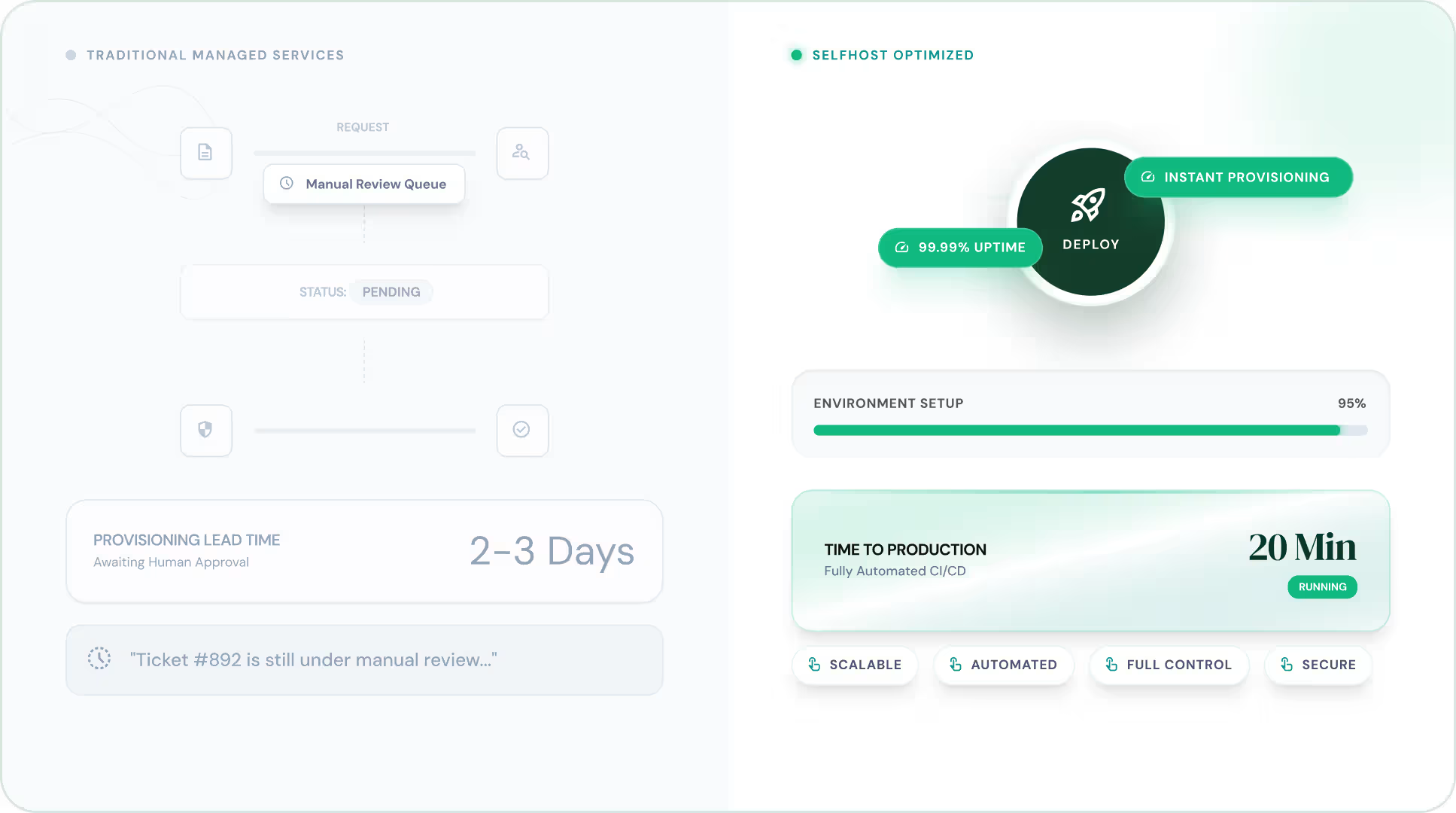
See how teams facing real-world database challenges could streamline operations, reduce DevOps dependency, and scale confidently with SelfHost.

How a Seed-Stage Startup Solved Database Management Without DevOps Bottlenecks

How a Seed-Stage Startup Solved Database Management Without DevOps Bottlenecks

Growing startup can simplify PostgreSQL management without hiring a DevOps team.

SaaS Startup – Reduce AWS RDS Costs – SelfHost

SaaS Startup – Reduce AWS RDS Costs – SelfHost

Bootstrapped SaaS can reduce database costs with scalable, cost-efficient PostgreSQL hosting.
Why Secure PostgreSQL Hosting for SaaS Became a Critical Decision for a Solo Founder

Why Secure PostgreSQL Hosting for SaaS Became a Critical Decision for a Solo Founder

Affordable self-hosted PostgreSQL for production-ready startup launches.

Here are some of the use cases SelfHost helps you solve: reducing database costs, eliminating vendor lock-in, & gaining full infrastructure control.
  • Cost optimization across cloud databases
  • High-availability self-hosted PostgreSQL clusters
  • Automated backups, snapshots, and disaster recovery
  • Centralized monitoring and performance insights
  • Multi-environment management (dev, staging, production)
Get started

Run Production Databases
On Your Terms

Deploy self-hosted PostgreSQL and scalable cloud databases with automation, high availability, and full infrastructure control.